

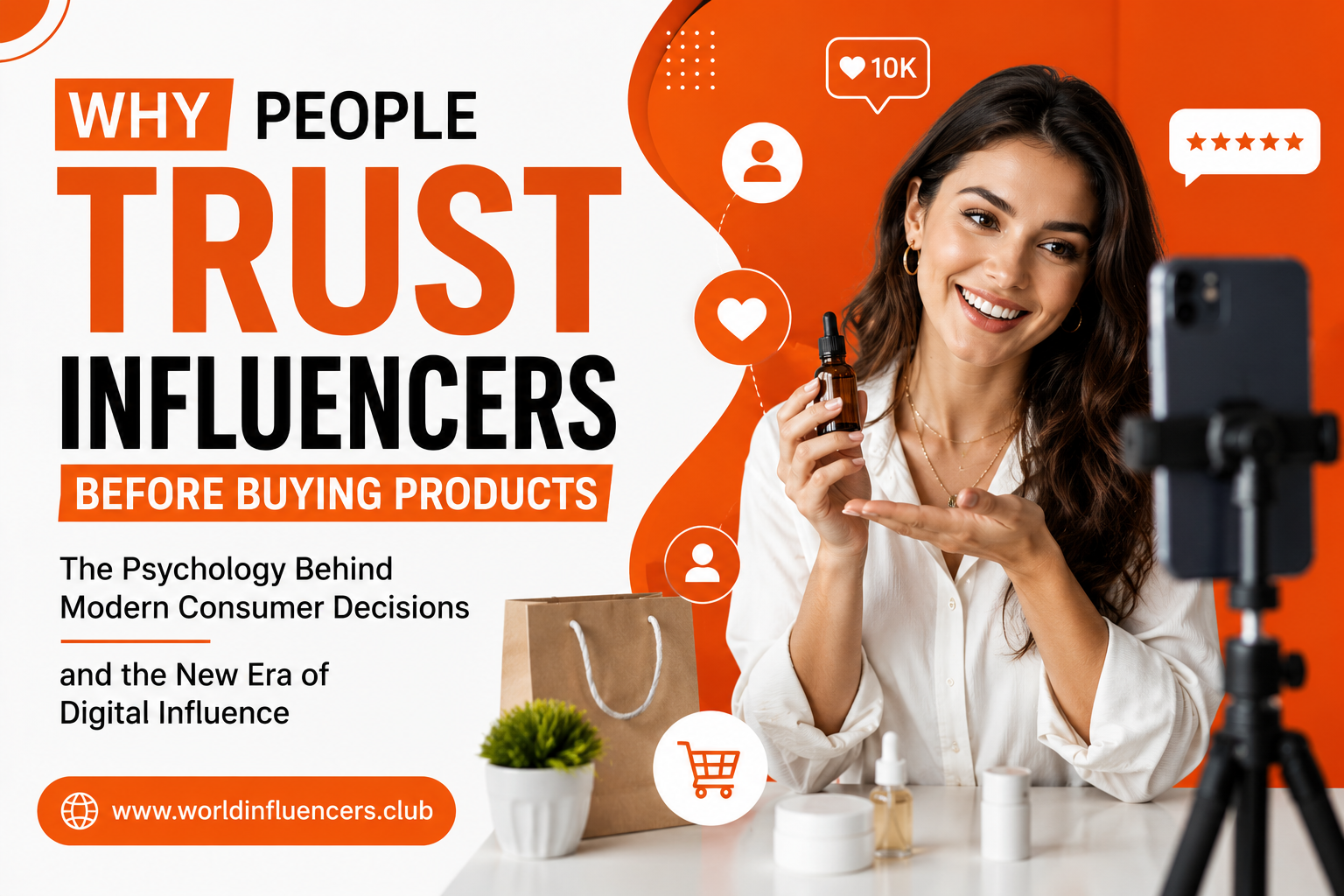
A customer today does not simply buy a product. They buy confidence, connection, experience, and proof. Before clicking the “buy now” button, many consumers search for reviews, watch videos, check recommendations, and look for someone they already trust. This is where influencers have transformed the way people discover, evaluate, and purchase products.
The traditional advertisement era was built around brands telling customers why they should buy. The modern digital era is built around people showing customers why they should believe. A recommendation from a trusted influencer often feels less like an advertisement and more like advice from a friend.
This shift has created one of the biggest changes in consumer psychology: people increasingly trust human experiences more than brand promises.
The Power Of Human Connection In A Digital World
People are naturally influenced by stories and relationships. A brand logo, a professional advertisement, or a celebrity campaign may attract attention, but trust is created when consumers see real people sharing real experiences.
Influencers build communities by consistently creating content, sharing opinions, showing daily routines, answering questions, and engaging with their audience. Over time, followers develop a sense of familiarity. Even though the relationship exists digitally, the emotional connection feels personal.
This is why a person explaining how a skincare product improved their routine, how a fitness product helped them achieve results, or how a technology product solved a problem can influence purchasing decisions more effectively than a simple advertisement.
Consumers are not only buying products anymore. They are buying the confidence that comes from seeing someone they admire use and recommend those products.
Trust Has Become The New Currency Of Business Growth
In today’s competitive marketplace, attention is everywhere, but trust is rare.
Thousands of brands compete for visibility every day. Customers are overwhelmed by advertisements, discounts, and promotional messages. As a result, they look for signals that help them make safer decisions.
Influencers provide one of the strongest trust signals through social proof.
When consumers see others using, reviewing, and recommending a product, it reduces uncertainty. It answers the questions customers silently ask:
“Does this product actually work?”
“Can I trust this brand?”
“Will this purchase be worth my money?”
Influencer recommendations help remove these doubts by providing relatable proof before the customer makes a decision.
Why Authenticity Beats Perfect Advertising
For years, companies focused on creating flawless advertisements. Perfect images, perfect models, and perfect messages dominated marketing campaigns.
But modern consumers have become smarter. They can recognize when something feels artificial.
Influencers succeed because many of them create content that feels natural. They share personal experiences, honest opinions, challenges, and behind-the-scenes moments. This authenticity creates a stronger emotional connection.
A customer may ignore a polished advertisement, but they may stop scrolling when someone they follow says:
“I tried this product, and here is what happened.”
The human element makes the message believable.
The Psychology Behind Influencer Marketing
The reason influencer marketing works is deeply connected to human psychology.
People naturally follow guidance from individuals they perceive as knowledgeable, relatable, or trustworthy. This is known as social influence.
When someone sees a respected creator recommending a product, several psychological factors come into play:
Authority: The influencer is viewed as someone with experience or expertise.
Relatability: Followers feel connected because they share similar interests, lifestyles, or challenges.
Social proof: People feel more comfortable choosing products that others already trust.
Emotional connection: Stories create memories and stronger buying motivation than simple product information.
These factors combine to influence purchasing behavior.
Consumers Want Guidance, Not Just Information
The internet has given customers unlimited access to information. However, more information does not always make decisions easier.
In many cases, too many choices create confusion.
Consumers often look for someone who can simplify decisions. They want recommendations, comparisons, demonstrations, and honest opinions.
Influencers become digital guides who help audiences navigate crowded markets.
Whether someone is buying fashion, beauty products, technology, health products, food, or services, they often seek confirmation from people they trust before investing their money.
The Rise Of Micro Influencers And Community-Based Trust
A common misconception is that only celebrities can influence purchasing decisions.
The reality is changing.
Micro influencers with smaller but highly engaged communities often create stronger trust because their audiences feel closer to them. Their recommendations can appear more personal and genuine.
A creator with 20,000 loyal followers who regularly interacts with their audience may generate more meaningful influence than someone with millions of followers but limited connection.
The future of influencer marketing is not only about reach. It is about relevance, credibility, and relationships.
Why Brands Must Adapt Before It Is Too Late
Businesses that continue relying only on traditional advertising may struggle to build emotional connections with modern customers.
The future belongs to brands that understand people buy from people.
Successful companies are now focusing on building communities, partnering with trusted creators, encouraging customer stories, and creating experiences that people want to share.
Influencer marketing is not simply a promotional strategy. It represents a fundamental change in how trust is created.
Brands that understand this shift will build stronger customer loyalty. Brands that ignore it may struggle to compete in an environment where consumer confidence determines success.
The Future Of Buying Decisions Is Built On Trust
The question is no longer whether influencers affect purchasing decisions. The real question is how businesses can create meaningful relationships that earn consumer trust.
People trust influencers before buying products because they are searching for something brands cannot manufacture easily: authenticity.
In the future, the strongest brands will not only advertise products. They will create stories, build communities, and become part of conversations that matter.
The companies that win will be the ones that understand a simple truth:
People do not just buy what brands sell. They buy what they believe.