

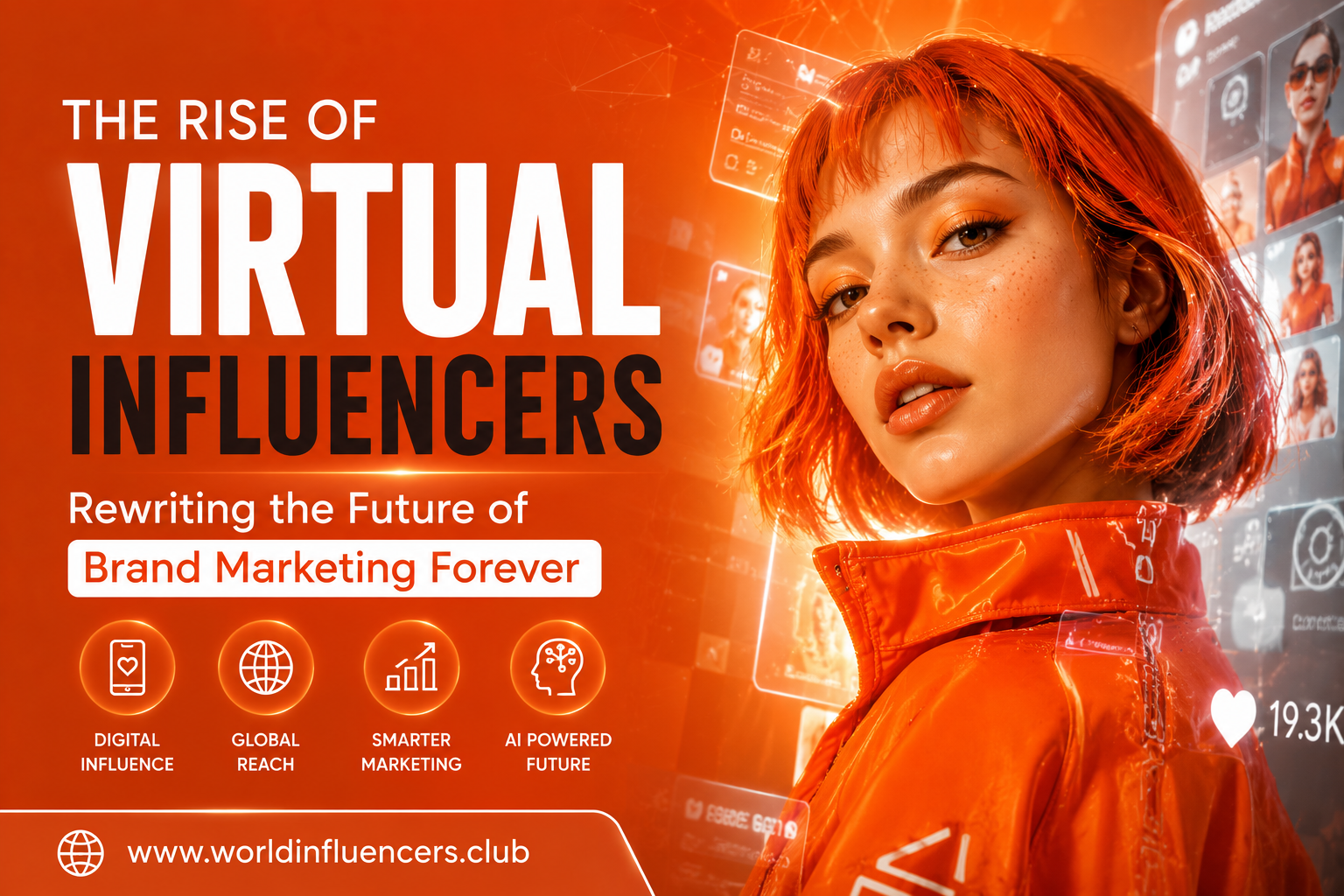
The Rise of Virtual Influencers and How They Are Quietly Rewriting the Future of Brand Marketing Forever
In the last decade, marketing has shifted from traditional celebrity endorsements to digital-first storytelling. But a new force is now reshaping the entire advertising ecosystem—virtual influencers. These computer-generated personalities are no longer futuristic experiments. They are active brand ambassadors, cultural trendsetters, and revenue-driving assets for global companies.
What makes this shift powerful is not just technology, but psychology. Audiences are forming emotional connections with characters who do not exist in the physical world. Brands are now asking a critical question: if influence drives sales, does it matter whether the influencer is real?
The answer is changing the marketing industry faster than most businesses can adapt.
What Are Virtual Influencers and Why Brands Are Paying Attention
Virtual influencers are digitally created personalities designed using advanced CGI, AI modeling, and storytelling systems. They behave like real influencers on platforms such as Instagram and TikTok, posting content, engaging audiences, and collaborating with brands.
Unlike human influencers, they are fully controlled by creative teams or companies. This means no scandals, no unpredictability, and complete brand alignment.
For marketers, this control is revolutionary.
Key reasons brands are investing heavily:
- Full control over messaging and identity
- Zero reputational risk from personal controversies
- 24/7 global availability
- Infinite creative flexibility
- Cost efficiency at scale over long-term campaigns
This is not just influencer marketing evolution—it is influencer replacement in certain categories.
Why Virtual Influencers Are Emotionally Powerful (Even Without Being Real)
The most surprising part of this trend is emotional attachment.
Audiences know these influencers are not human, yet they still:
- Follow their lives
- Engage with their content
- Trust their recommendations
- Feel connected to their “personality”
This happens because modern digital audiences are already conditioned to form parasocial relationships through screens. Virtual influencers amplify this by being perfectly curated—never aging, never breaking character, and always aligning with audience expectations.
Brands like Nike and Coca-Cola have experimented with digital storytelling formats that mirror this approach, blending real-world marketing with virtual identity systems.
The emotional hook is simple: perfection is comforting, and virtual influencers are engineered perfection.
How Virtual Influencers Are Changing Brand Strategy
Traditional influencer marketing relied on authenticity and lived experience. Virtual influencers replace that with narrative precision.
Brands now design campaigns like cinematic universes:
- Character backstories are built like film scripts
- Visual identity is consistent across all platforms
- Messaging is pre-approved and strategically timed
- Audience engagement is guided, not improvised
This allows companies to treat influencers like long-term intellectual property rather than temporary collaborators.
In other words, influencers are becoming assets, not individuals.
The Hidden Advantages Brands Rarely Talk About
Beyond creativity and control, virtual influencers offer structural advantages that are reshaping marketing budgets:
1. Predictable ROI
No sudden drop in engagement due to personal controversies or behavioral changes.
2. Global scalability
A single virtual influencer can be localized into multiple cultures and languages instantly.
3. Infinite content production
No scheduling constraints, fatigue, or creative burnout.
4. Legal safety
Fewer contractual risks and compliance issues compared to human influencers.
This is why marketing departments are increasingly integrating AI-driven brand personas into long-term strategies rather than short-term campaigns.
The Risk: When Reality Starts Losing Its Value
Despite their advantages, virtual influencers introduce a deeper concern: authenticity fatigue.
Audiences are beginning to question:
- What is real and what is manufactured?
- Are we being emotionally manipulated by algorithms?
- Does influence still mean trust if no human experience exists behind it?
This tension will define the next phase of digital marketing.
If brands overuse virtual influencers, audiences may shift back toward raw, imperfect human storytelling. But if balanced correctly, virtual and human influencers will coexist in hybrid ecosystems.
What Businesses Must Do Now to Stay Ahead
Brands that ignore virtual influencers risk falling behind in attention-driven markets.
Here is what forward-thinking companies are already doing:
- Developing hybrid influencer strategies (human + virtual)
- Investing in AI storytelling teams
- Creating brand-owned digital characters
- Testing audience reactions in controlled micro-campaigns
- Integrating virtual influencers into product launches
The future of marketing is no longer just about reach—it is about controlled perception at scale.
The Future Outlook: Where This Is All Heading
We are entering a phase where influencers will not just promote brands—they will be brands.
Entire digital personalities may launch:
- Fashion lines
- Music careers
- Entertainment franchises
- Global brand partnerships
And unlike human celebrities, these figures can be scaled, replicated, and optimized indefinitely.
The boundary between entertainment, marketing, and artificial identity is dissolving.
The brands that understand this early will define the next decade of consumer attention.
Final Thought
Virtual influencers are not a trend—they are a structural shift in how influence itself is created and monetized. The question is no longer whether they will dominate certain segments, but how quickly businesses can adapt before attention moves entirely into engineered digital worlds.