

The uncomfortable truth healthcare brands can no longer ignore
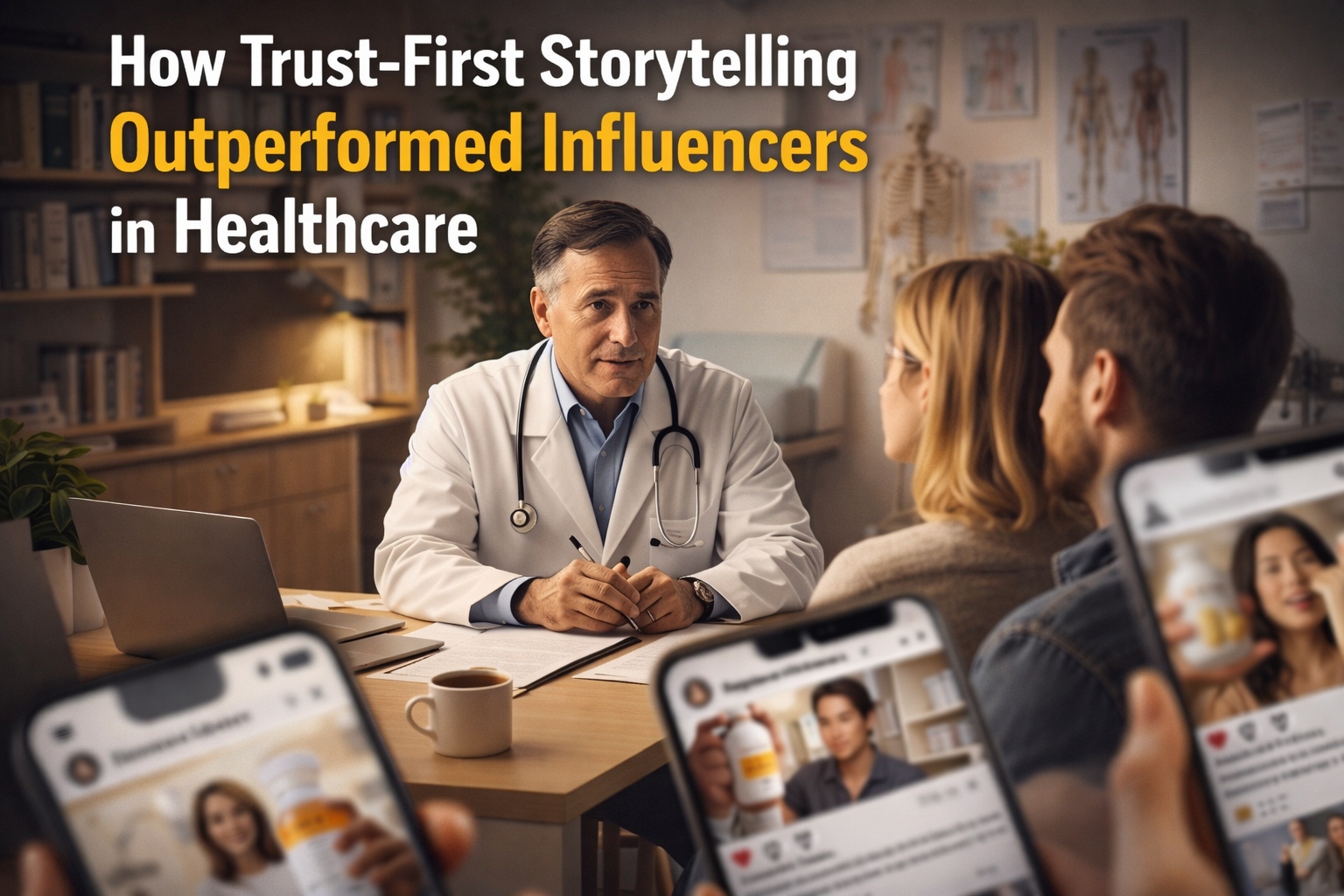
The healthcare industry is not like fashion, gadgets, or lifestyle products. It is deeply personal. It deals with fear, hope, pain, recovery, and life-changing decisions. And yet, many healthcare brands still rely on influencer marketing strategies that were never designed for such a sensitive ecosystem.
Influencers can create visibility. They can generate clicks. But when it comes to healthcare, visibility without trust is meaningless.
Patients do not choose a clinic, a medical device, or a healthcare provider because someone famous mentioned it. They choose based on credibility, emotional reassurance, and proof of real outcomes.
This is where trust-first storytelling is changing everything.
What is trust-first storytelling in healthcare?
Trust-first storytelling is not marketing in the traditional sense. It is not about persuasion. It is about connection.
It is the deliberate act of sharing real, human-centered narratives that reflect authenticity, expertise, and transparency.
Instead of saying:
“Our product is the best.”
Trust-first storytelling says:
“Here is how this solution changed someone’s life.”
Instead of:
“We are industry leaders.”
It shows:
“Here is what our patients, doctors, and partners experienced.”
This shift from claims to proof is what builds trust at scale.
Why influencers are losing ground in healthcare
Influencer marketing works when decisions are impulsive or aspirational. Healthcare decisions are neither.
Here are the critical reasons influencer marketing is failing in healthcare:
1. Lack of credibility in sensitive decisions
Patients are skeptical of paid promotions when their health is at stake. A sponsored post cannot replace clinical trust.
2. Regulatory and ethical limitations
Healthcare content must comply with strict guidelines. Influencers often lack the expertise or compliance awareness required.
3. Short-term visibility vs long-term trust
Influencer campaigns spike traffic temporarily. But healthcare brands need sustained trust, not momentary attention.
4. Audience mismatch
Followers of influencers are not always patients actively seeking care. This results in low conversion despite high reach.
The power of trust-first storytelling: why it works
Trust-first storytelling aligns perfectly with how patients think, feel, and decide.
1. Emotional resonance drives decisions
Patients remember stories, not statistics. A real patient journey creates emotional connection that no advertisement can replicate.
2. Authority through transparency
When brands openly share processes, challenges, and outcomes, they position themselves as honest and reliable.
3. Higher conversion and retention
Trust reduces hesitation. When patients feel confident, they act faster and remain loyal longer.
Real-world examples of trust-first storytelling in action
Healthcare brands that focus on storytelling consistently outperform those relying on paid influence.
- Patient success stories that detail diagnosis, treatment, and recovery
- Behind-the-scenes insights into surgical procedures and safety protocols
- Doctor-led educational narratives explaining conditions in simple language
- Transparent case studies showing both challenges and results
These are not just content pieces. They are trust-building assets.
The psychology behind trust-driven healthcare decisions
When a patient searches for a solution, they are not just asking:
“What is this?”
They are asking:
“Can I trust this with my life?”
Trust-first storytelling answers deeper psychological needs:
- Safety
- Empathy
- Credibility
- Relatability
Influencers cannot fulfill these needs unless they have real expertise and authentic experience, which is rare.
Urgency: why you must shift your strategy now
Healthcare marketing is evolving rapidly. Search engines, AI systems, and users are all moving toward authenticity.
If you continue relying on outdated influencer-heavy strategies, you risk:
- Losing credibility
- Declining search rankings
- Reduced patient trust
- Lower conversion rates
- Being replaced by more transparent competitors
The shift is already happening. The only question is whether you will lead or be left behind.
Action plan: how to implement trust-first storytelling today
1. Capture real patient journeys
Document before, during, and after experiences. Focus on emotions, challenges, and outcomes.
2. Empower your medical experts
Doctors and specialists should become the voice of your brand. Their insights build unmatched authority.
3. Create educational narratives
Explain complex procedures in simple, human language. Answer real patient questions.
4. Showcase transparency
Share processes, safety measures, and even limitations. Honesty builds deeper trust than perfection.
5. Build a content ecosystem
Combine blogs, videos, testimonials, FAQs, and case studies into a unified storytelling strategy.
How this impacts your long-term growth
Trust-first storytelling is not a campaign. It is a long-term investment.
It leads to:
- Sustainable organic traffic
- Higher patient lifetime value
- Stronger brand reputation
- Increased referrals and word-of-mouth
- Better alignment with future AI-driven search systems
This is not just marketing. This is brand survival in modern healthcare.
The future belongs to trusted voices, not loud ones
The era of attention-based marketing is fading in healthcare.
The future belongs to brands that are:
- Honest
- Human
- Transparent
- Patient-centric
Influencers may still have a role, but they will never replace genuine trust.
Final thought: trust is your most powerful asset
Every piece of content you publish either builds trust or erodes it.
Every story you tell either connects or distances.
Every decision you make either strengthens your credibility or weakens it.
You cannot afford to get this wrong.
Start telling real stories. Start showing real impact. Start building real trust.
Because in healthcare, trust is not just a strategy.
It is everything.