

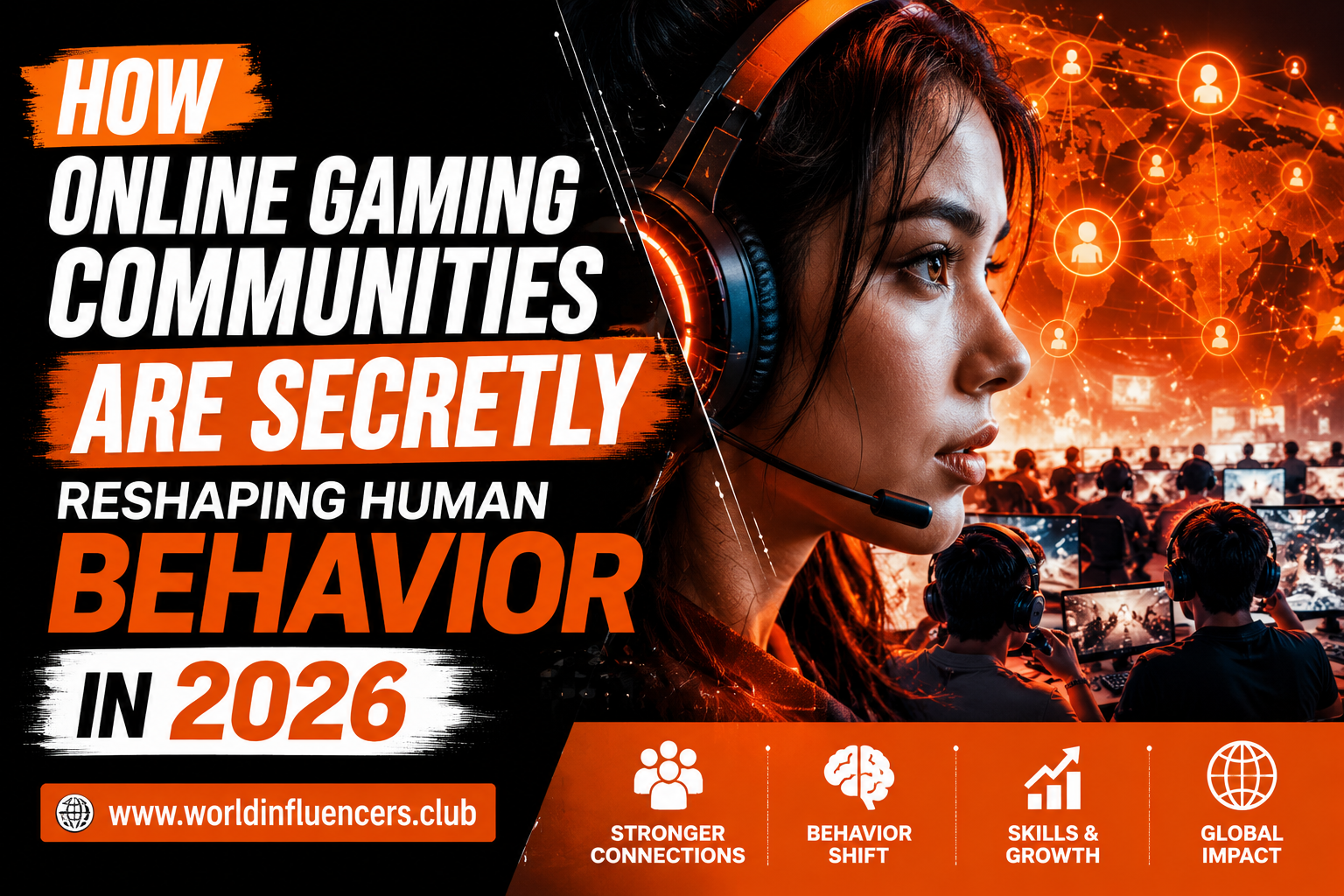
The digital battlefield is no longer just a game
The gaming industry has evolved far beyond entertainment. Today, online gaming communities are influencing the way millions of people think, communicate, compete, trust, socialize, and even define their identities. What once started as simple multiplayer experiences has transformed into powerful digital ecosystems where friendships are built, conflicts emerge, cultures are created, and behaviors are constantly shaped.
From competitive esports arenas to casual multiplayer worlds, online gaming communities now hold immense psychological and social influence over players of all ages. Whether positive or negative, these virtual communities are changing human interaction faster than most people realize.
The question is no longer whether gaming communities influence behavior.
The real question is how deeply they are affecting society and what that means for the future.
The rise of online gaming communities
Online gaming communities have exploded over the last decade due to advancements in internet technology, mobile gaming, livestreaming platforms, and global esports culture. Players are no longer isolated individuals sitting behind screens. They are part of interconnected digital tribes.
Games such as multiplayer battle arenas, survival games, role-playing universes, and competitive shooters encourage constant interaction. Players communicate daily through voice chat, social media groups, forums, Discord servers, livestream chats, and gaming events.
These communities create environments where behavior spreads rapidly. Positive habits can grow quickly, but toxic patterns can spread just as fast.
Gaming is no longer just gameplay.
It is now social influence at scale.
How gaming communities positively influence player behavior
Building communication and teamwork skills
Many online games require players to collaborate under pressure. Team-based objectives force players to communicate strategically, solve problems quickly, and trust one another.
Players often learn:
- Leadership
- Cooperation
- Conflict management
- Fast decision-making
- Strategic thinking
- Emotional control
For younger gamers especially, these experiences can strengthen confidence and social interaction skills. Many introverted players find online communities easier to navigate compared to face-to-face environments.
Gaming communities can become spaces where people feel heard, accepted, and valued.
Creating global friendships and cultural exposure
One of the strongest impacts of online gaming is global connectivity. A single match can include players from multiple countries, cultures, and backgrounds.
This exposure helps players:
- Understand different perspectives
- Improve language skills
- Develop cultural awareness
- Build international friendships
- Experience diverse communication styles
For many players, gaming communities become their primary social network. Some friendships formed online eventually become real-world partnerships, business collaborations, or lifelong support systems.
Encouraging competitive growth and motivation
Competitive gaming environments often inspire players to improve themselves. Ranking systems, tournaments, and team structures encourage discipline, consistency, and resilience.
Many gamers learn valuable life lessons through competition:
- Handling failure
- Adapting under pressure
- Goal setting
- Persistence
- Time management
The emotional investment in gaming communities can motivate players to push beyond their comfort zones.
The darker side of online gaming communities
Toxic behavior and online aggression
Not all gaming communities are healthy. Toxicity remains one of the biggest concerns in online gaming culture.
Players may experience:
- Harassment
- Cyberbullying
- Verbal abuse
- Racism
- Sexism
- Exclusion
- Manipulation
When toxic behavior becomes normalized inside gaming communities, players can slowly adopt aggressive communication habits themselves.
Repeated exposure to hostility can emotionally affect younger players and increase stress, frustration, and social anxiety.
Some communities reward dominance and humiliation instead of healthy competition, creating environments where negativity spreads rapidly.
Addiction and emotional dependency
Gaming communities are designed to keep players engaged. Daily rewards, rankings, seasonal events, and social obligations encourage continuous participation.
Many players fear missing out on community activities, competitive progress, or friendships. Over time, emotional dependency can develop.
This may lead to:
- Sleep disruption
- Reduced academic performance
- Isolation from family
- Declining mental focus
- Emotional burnout
For some individuals, online validation from gaming communities becomes more important than real-world relationships.
The emotional attachment can become difficult to break.
Identity shaping and behavioral imitation
Gaming communities often create strong group identities. Players may imitate influencers, streamers, teammates, or dominant personalities within their communities.
This influences:
- Speech patterns
- Attitudes
- Humor
- Social behavior
- Emotional reactions
- Moral boundaries
When influential community figures promote toxic behavior, younger audiences may unconsciously normalize those actions.
At the same time, positive role models within gaming communities can encourage discipline, kindness, and self-improvement.
The influence depends heavily on the environment surrounding the player.
The psychology behind gaming community influence
Online gaming communities are psychologically powerful because they satisfy core human needs:
Belonging
Humans naturally seek communities where they feel accepted. Gaming communities provide instant social identity.
Achievement
Ranking systems trigger reward responses in the brain, increasing emotional investment.
Recognition
Players gain status through skill, experience, and visibility within communities.
Escape
Gaming environments can temporarily distract players from stress, loneliness, or personal struggles.
These psychological rewards create deep emotional connections that strengthen community influence over behavior.
How parents and educators should respond
Ignoring gaming culture is no longer realistic. Online gaming communities are part of modern social development.
Instead of banning games entirely, parents and educators should focus on guidance and balance.
Important strategies include:
- Encouraging healthy gaming habits
- Monitoring online interactions
- Discussing digital behavior openly
- Teaching emotional intelligence
- Promoting offline activities
- Supporting positive gaming communities
Understanding gaming culture is essential for helping young players navigate digital environments safely.
The future of online gaming communities
Gaming communities will become even more influential as virtual reality, artificial intelligence, and metaverse technologies expand.
Future gaming ecosystems may include:
- Virtual workplaces
- Digital education systems
- AI-driven social interactions
- Advanced esports economies
- Immersive virtual societies
The line between online identity and real-world identity will continue to blur.
This means player behavior inside gaming communities may increasingly affect behavior outside the screen.
The future generation is not simply growing up with games.
They are growing up inside digital communities that shape how they think, behave, communicate, and connect with the world.
Why society must pay attention now
Online gaming communities are no longer niche entertainment spaces. They are influential social ecosystems with the power to shape attitudes, emotions, communication patterns, and human relationships.
The impact can be inspiring or destructive depending on the environment players engage with daily.
Healthy gaming communities can create confident, collaborative, globally connected individuals.
Toxic gaming communities can encourage aggression, addiction, emotional instability, and harmful social behavior.
The responsibility now falls on developers, parents, educators, and players themselves to create digital environments that encourage respect, balance, and healthy interaction.
Because the communities shaping player behavior today may ultimately shape the future of society tomorrow.