

The rise of celebrity activism and the new era of social influence
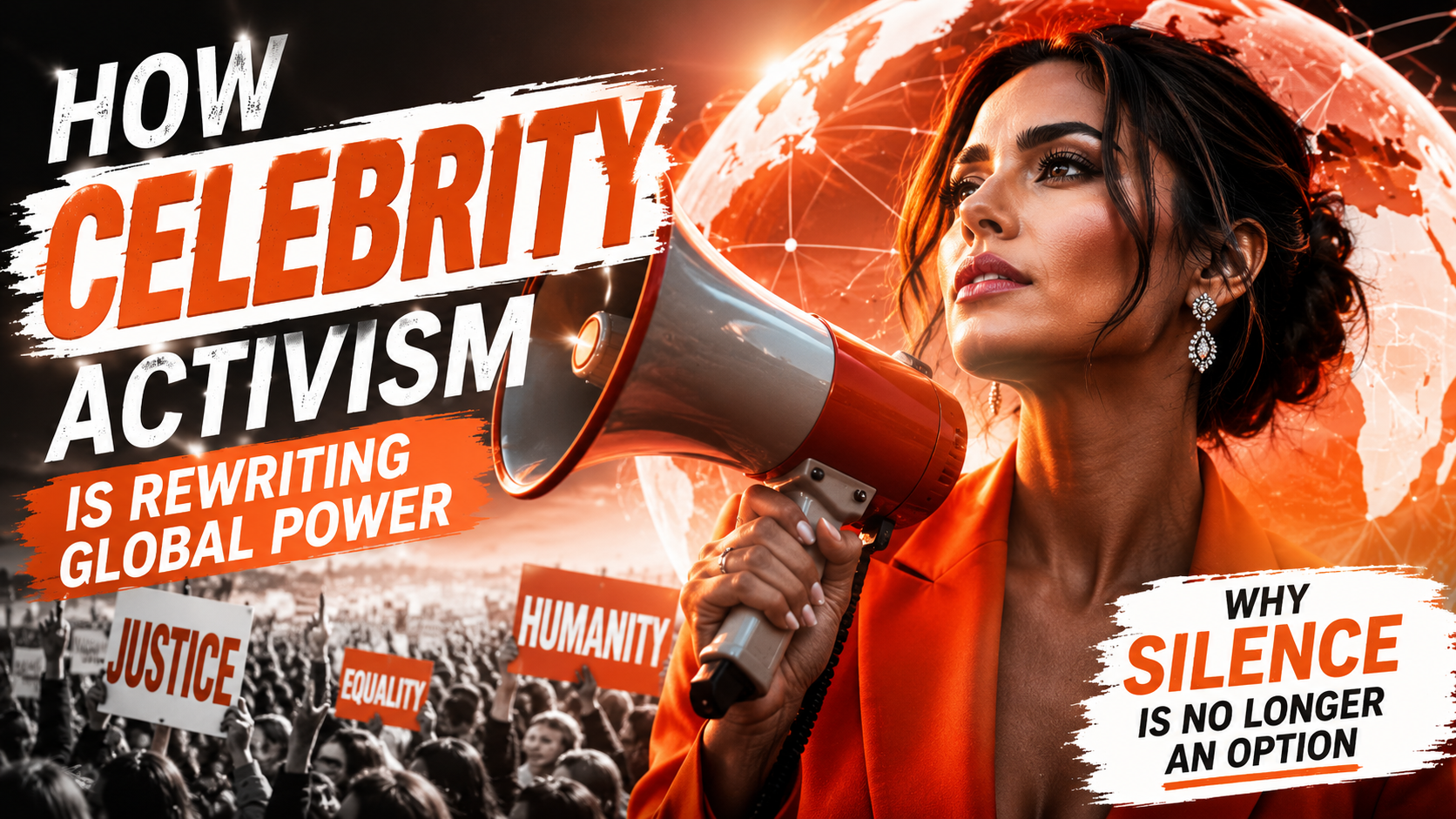
The world no longer listens only to politicians, governments, or traditional institutions. Today, celebrities shape conversations faster than news channels, influence public emotions more deeply than corporate campaigns, and ignite social movements with a single post, speech, interview, or public stand. Celebrity activism has evolved from occasional charity appearances into a global force capable of shifting public opinion, driving donations, influencing elections, exposing injustice, and pressuring world leaders to act.
In an age dominated by digital media, audiences are emotionally connected to actors, athletes, musicians, creators, and influencers. People follow their lifestyles, beliefs, struggles, and opinions daily. That emotional trust has transformed celebrities into powerful cultural messengers. Whether speaking about climate change, racism, mental health, gender equality, war, education, poverty, or human rights, celebrity activism is no longer a side conversation. It has become a defining force in modern social change.
The impact is massive. A single celebrity campaign can mobilize millions within hours. Fundraising records are broken overnight. Forgotten humanitarian crises suddenly become global headlines. Younger generations, especially Gen Z and Millennials, are heavily influenced by public figures they admire. This emotional influence is changing how movements grow and how society reacts to injustice.
But with great influence comes a dangerous question. Is celebrity activism creating meaningful transformation, or is it becoming performance-driven visibility designed for headlines and brand value?
That question matters more now than ever before.
Why celebrity activism has become more powerful than traditional media
Social media completely changed the balance of influence. Before platforms like Instagram, TikTok, X, YouTube, and Facebook, celebrities depended on television interviews or newspaper coverage to share opinions. Today they control their own audience directly.
This direct connection gives celebrities extraordinary power.
When a celebrity speaks about a social issue, millions instantly engage through shares, comments, videos, reactions, and debates. Traditional gatekeepers no longer control the narrative. One emotional video or passionate statement can dominate global discussions for weeks.
Modern audiences are also emotionally driven. They trust personalities more than institutions. Many young people feel disconnected from political systems but emotionally connected to artists, athletes, and entertainers. This creates a new form of leadership based on relatability, visibility, and emotional influence rather than official authority.
That is why celebrity activism now influences:
- Public opinion
- Political conversations
- Brand behavior
- Donation campaigns
- Humanitarian awareness
- Youth engagement
- Social justice movements
- Corporate responsibility
The influence is no longer symbolic. It creates measurable social outcomes.
How celebrity activism drives real social change
Raising awareness at global scale
One of the greatest strengths of celebrity activism is visibility. Many important issues remain ignored until a famous personality speaks about them publicly.
When celebrities discuss social injustice, millions who were previously unaware begin paying attention. Media outlets amplify the message. Discussions explode online. Search trends rise dramatically. Organizations receive more traffic, donations, and volunteers.
This awareness creates momentum.
Topics once considered niche or uncomfortable suddenly become mainstream conversations. Mental health, body positivity, racial discrimination, domestic violence, refugee crises, and climate anxiety gained enormous public visibility partly because celebrities normalized these conversations.
Awareness alone does not solve problems, but silence guarantees nothing changes.
Influencing younger generations
Younger audiences consume culture through celebrity personalities. They observe how public figures speak, react, donate, protest, and respond during crises. Celebrities influence fashion, language, opinions, and even moral positioning.
This influence becomes powerful when connected to social causes.
Young people who previously ignored social issues often become engaged because a favorite celebrity spoke openly about them. That emotional bridge matters. It transforms distant issues into personal concerns.
Celebrity activism has encouraged millions of young people to:
- Register to vote
- Support humanitarian campaigns
- Discuss mental health openly
- Participate in protests
- Donate to charities
- Challenge discrimination
- Learn about climate issues
- Advocate for equality
Social change becomes stronger when youth participation increases.
Pressuring governments and corporations
Governments and corporations care deeply about public image. Celebrity activism creates public pressure that institutions cannot easily ignore.
When influential public figures criticize injustice or support movements, media attention intensifies. Public scrutiny grows. Companies face consumer backlash. Political leaders face mounting pressure to respond.
Many corporations changed policies after celebrity-supported campaigns generated global outrage. Public relations crises escalate rapidly when celebrities amplify social criticism.
This demonstrates an important truth about modern activism.
Visibility creates accountability.
Fundraising and humanitarian impact
Celebrity-led fundraising campaigns often generate extraordinary financial support within days. Their visibility attracts attention that smaller organizations struggle to achieve independently.
Whether supporting disaster relief, education initiatives, medical treatment, refugee support, or hunger programs, celebrity influence helps accelerate donations significantly.
Fans are emotionally motivated to contribute because they trust the messenger.
The result is faster humanitarian response and larger global participation.
The emotional psychology behind celebrity influence
Celebrity activism works because humans are emotionally wired for connection.
Audiences feel familiarity with public figures they watch constantly online. Psychologists describe this as a parasocial relationship. Even without real-life interaction, people feel emotionally connected to celebrities.
That emotional trust creates influence.
When celebrities express vulnerability, discuss personal struggles, or advocate passionately for causes, audiences interpret the message emotionally rather than analytically. This emotional response increases engagement and motivation.
In many cases, celebrities humanize issues more effectively than institutions.
Statistics alone rarely move people emotionally. Stories do.
Celebrities often turn abstract social problems into emotionally relatable narratives that audiences can understand and share.
The dangers and criticism of celebrity activism
Despite its positive impact, celebrity activism also faces serious criticism.
Not every celebrity speaks from expertise, sincerity, or responsibility. Some activism appears performative rather than meaningful. Critics argue that certain public figures use activism to protect their image, increase popularity, or align with profitable public sentiment.
This creates skepticism.
Performative activism and public backlash
Audiences are becoming smarter. They recognize when activism feels superficial.
Posting a hashtag without meaningful action no longer satisfies people seeking real accountability. Modern audiences expect consistency, education, transparency, and long-term commitment.
Celebrities who appear selective, opportunistic, or uninformed often face severe backlash online.
Performative activism can damage important movements by reducing serious issues into temporary trends.
Overshadowing real experts and activists
Another criticism is that celebrity voices sometimes overshadow activists, researchers, journalists, and local communities who have dedicated years to specific causes.
Media attention often prioritizes famous personalities instead of experts with deeper understanding.
This imbalance can simplify complex issues and reduce nuanced conversations into emotional soundbites.
True activism requires listening, learning, and amplifying affected communities rather than dominating attention.
Misinformation and emotional manipulation
Celebrity influence becomes dangerous when inaccurate information spreads rapidly.
Millions may believe statements without fact-checking simply because they admire the messenger. This creates risks during political conflicts, health crises, or social tensions.
Influence without responsibility can create confusion instead of progress.
That is why ethical activism matters deeply.
The future of celebrity activism in a hyperconnected world
Celebrity activism will continue expanding because digital influence continues growing globally.
Future activism will likely become more immersive, emotionally driven, and community-focused. Audiences increasingly expect public figures to stand for something meaningful rather than remain silent during major social crises.
Silence itself is becoming political.
Brands are also adapting. Companies increasingly collaborate with socially conscious celebrities to strengthen public trust and cultural relevance. Activism is becoming integrated into entertainment, marketing, philanthropy, and leadership narratives.
However, the future will reward authenticity over performance.
Audiences now demand evidence of real commitment. They expect celebrities to:
- Support long-term initiatives
- Donate transparently
- Educate themselves deeply
- Listen to affected communities
- Remain consistent during criticism
- Take real-world action beyond social media
The era of shallow activism is slowly collapsing.
Why this conversation matters more than ever
The impact of celebrity activism on social change is not a passing trend. It reflects a major transformation in how society processes information, leadership, emotion, and influence.
The real question is no longer whether celebrities should speak about social issues.
The real question is what happens when influential people remain silent while injustice grows louder.
History remembers those who used influence responsibly during moments that demanded courage. In today’s digital world, influence is one of the most powerful currencies on earth. How celebrities choose to use it can shape elections, save lives, influence generations, and redefine public consciousness.
Social change no longer begins only in government halls or academic institutions.
Sometimes it begins with one voice powerful enough to make millions stop scrolling and start thinking.
Conclusion
Celebrity activism has transformed modern social movements by combining emotional storytelling, digital reach, cultural influence, and public visibility. It has raised awareness, inspired younger generations, accelerated fundraising, pressured institutions, and amplified critical social conversations worldwide.
At the same time, society must remain cautious about performative activism, misinformation, and shallow engagement. Real impact requires authenticity, responsibility, consistency, and action beyond public appearances.
The future belongs to voices willing to stand for something larger than fame itself.
Because in a world overwhelmed by noise, influential voices can either distract society or help transform it.
And that choice may define the next generation of social change.